Educational Disclaimer: This content is strictly for educational and research purposes and does not constitute financial, investment, or legal advice. Tokenized commodities, real-world asset (RWA) protocols, and decentralized finance applications involve significant custodial, smart contract, and market risks. Always conduct independent due diligence before allocating capital.
About the Author: Written by redpakpak, an independent research initiative focused on on-chain risk analysis, DeFi mechanisms, and tokenized real-world asset structures.
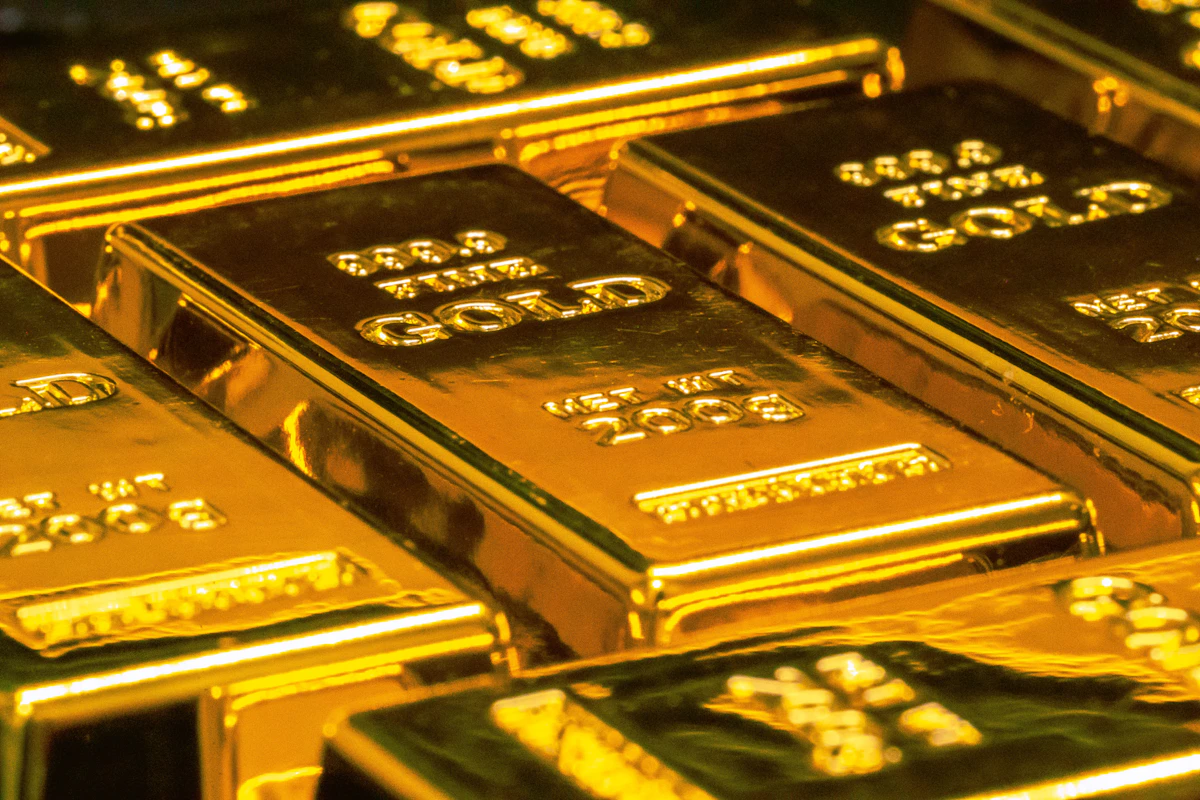
While institutional real-world asset (RWA) discussions often focus on tokenized U.S. Treasuries and private credit, retail adoption on-chain is steadily driven by a classic asset class: Tokenized Gold.
According to market data from RWA.xyz Analytics and industry trackers in mid-2026, the global tokenized gold market stands at approximately $4.5 to $6.0 billion. The sector is heavily dominated by two primary assets—PAX Gold (PAXG) and Tether Gold (XAUt)—which together account for over 90% of the total on-chain gold supply.
Backed by physical bullion stored in institutional vaults, Tokenized Gold provides 24/7 liquidity, fine-grained fractional ownership, and integration with Decentralized Finance (DeFi) protocols. Here is an analysis of why digital commodities lead RWA retail participation, alongside an operational comparison between PAXG and XAUt.
1. Zero Friction & Fractional Ownership of Tokenized Gold
Traditional physical gold investments present operational friction. Purchasing a physical bar requires storage, insurance, specialized logistics, and high minimum capital requirements. Gold ETFs (like GLD) eliminate physical custody hurdles but operate strictly within legacy market hours and carry management fees.
Adopting Tokenized Gold addresses both limitations:
- Fractionalized Access: Investors can purchase tiny fractions of a fine troy ounce (down to 18 decimals on Ethereum), making gold allocation accessible with low capital increments.
- Direct Allocated Ownership: Unlike synthetic derivative contracts, leading Tokenized Gold tokens represent direct legal ownership of specific, allocated London Good Delivery (LGD) gold bars stored in professional vaults.
- No Ongoing Storage Invoices: Storage fees are typically absorbed or structured into initial minting and redemption fees, eliminating recurring manual invoices for token holders.
2. 24/7 Global Liquidity & Instant Settlement for Tokenized Gold
Equity markets and traditional commodity exchanges operate on fixed trading hours, leaving investors exposed to weekend geopolitical events or overnight macroeconomic shifts. Tokenized Gold trades continuously on public blockchain networks.
Key liquidity mechanisms include:
- Continuous Price Discovery: Tokenized Gold trades around the clock across centralized exchanges (CEXs) and decentralized automated market makers (DEXs) like Uniswap and Curve.
- Instant Settlement: Transactions settle on-chain within seconds or minutes, bypassing traditional T+1 or T+2 clearinghouse settlement delays.
- Cross-Border Mobility: Capital can be transferred across international jurisdictions instantly without relying on legacy banking hours or cross-border wire systems.
3. DeFi Collateral & Yield Opportunities with Tokenized Gold
Gold itself is inherently a non-yielding asset; holding physical bullion in a vault produces no organic cash flow. However, Tokenized Gold allows holders to utilize their assets within DeFi money markets to generate secondary returns.
Key operational strategies include:
- Collateralized Borrowing: Deposit PAXG or XAUt as collateral on lending protocols (such as Aave or Sky, formerly MakerDAO) to borrow stablecoins (USDT/USDC) without triggering a taxable sale of the underlying metal.
- Liquidity Provision: Provide liquidity to trading pairs (e.g., PAXG/USDC or XAUt/ETH) on DEXs to earn trading fee allocations.
- Synthetic & Perpetual Margin: Post Tokenized Gold as collateral for decentralized derivatives trading, maintaining gold exposure while managing broader hedge strategies.
Note on Usage: While these strategies exist, current market data shows that active DeFi utilization remains relatively early, with approximately 1% to 2% of the total tokenized gold supply deployed in active smart contracts as of mid-2026.
4. PAXG vs. XAUt: Comparing Leading Tokenized Gold Assets
The two primary market providers—PAX Gold (PAXG) issued by Paxos Trust Company and Tether Gold (XAUt) issued by TG Commodities Limited—account for nearly the entire market capitalization. They serve distinct regulatory and operational functions.
| Feature / Attribute | PAX Gold (PAXG) | Tether Gold (XAUt) |
|---|---|---|
| Issuer | Paxos Trust Company | TG Commodities Limited (Tether) |
| Regulatory Oversight | Regulated by NYDFS / OCC Trust Framework | Operates under TG Commodities / Non-U.S. Jurisdiction |
| Vault Location | Brink’s Vaults (London, UK) | Secured Institutional Vaults in Switzerland |
| Allocation Matching | Direct serial number matching to specific LGD bars | Direct ownership allocated to physical gold bar numbers |
| Underlying Standard | 400 oz London Good Delivery (LGD) Gold Bars | 400 oz London Good Delivery (LGD) Gold Bars |
| Direct Physical Redemption | Typically Full London Good Delivery Bar (~400–430 troy oz) via issuer* | Full London Good Delivery Bar (~400–430 troy oz) via issuer |
| Supported Networks | Ethereum (ERC-20), Solana | Ethereum (ERC-20), TRON, TON, Solana |
| Primary Use Case | Regulatory-focused retail & institutional balance sheets | Cross-chain trading & high-liquidity DeFi ecosystems |
*Note: Primary redemption directly through issuers requires full London Good Delivery bars due to vault clearing mechanics. However, certain approved retail partners or secondary dealers may offer smaller physical exchange mechanisms.
Key Takeaway: Investors prioritizing strict regulatory oversight and U.S. institutional compliance frameworks often select PAXG. Traders seeking broad multi-chain liquidity and integration across the Tether stablecoin network typically utilize XAUt.
5. Strategic Hedge Against Fiat & Market Volatility with Tokenized Gold
Holding fiat-backed stablecoins introduces counterparty risks connected to traditional banking channels. Tokenized Gold serves as an alternative, commodity-backed reserve asset native to blockchain rails.
- Portfolio Diversification: Adds a historically uncorrelated real-world physical commodity to digital asset portfolios.
- Systemic De-risking: Functions as a neutral reserve asset during crypto market contractions, allowing market participants to reduce risk without converting capital back into fiat banking systems.
- Purchasing Power Preservation: Combines gold’s historical inflation-hedging properties with modern Web3 transaction efficiency.
Key Risks and Considerations when Buying Tokenized Gold
While Tokenized Gold bridges real-world assets with Web3, investors must account for specific risk factors:
- Custodial Counterparty Risk: Token value depends entirely on the issuer maintaining 1:1 physical reserves in vaulted storage. Regular third-party audits and Proof of Reserves (PoR) verification are critical.
- DeFi Smart Contract & Liquidation Risk: Deploying gold tokens as borrowing collateral carries protocol risks, including smart contract vulnerabilities and liquidation penalties during sharp price swings.
- Early-Stage DeFi Liquidity: With low overall DeFi deployment (around 1–2% of market cap), liquidity pools for earning yield may be thin compared to major stablecoin pools, limiting current yield potential.
- Regulatory Mechanics: Global regulatory frameworks governing asset-backed tokens continue to evolve, which may impact access or transfer rules over time.
Conclusion: Tokenized Gold as the Gateway to On-Chain Commodities
Tokenized Gold demonstrates how traditional physical commodities can transition into flexible, 24/7 liquid assets on public blockchains. Led by PAXG and XAUt, tokenized precious metals provide a functional model for the digital asset ecosystem in 2026.
To understand how tokenization extends to yield-bearing fixed-income assets, read our deep-dive analysis on Tokenized U.S. Treasuries, or explore our baseline guide on what RWA is and how it works.
Disclaimer: This content is for educational and informational purposes only and does not constitute financial, investment, or legal advice. Real-world assets (RWAs) and cryptocurrency tokens carry market, custodial, and smart contract risks. Yields generated through DeFi strategies are not guaranteed and involve additional smart-contract and liquidation risks. Always perform independent due diligence before committing funds to digital asset protocols.